From mother plant to sale, nothing gets lost.

Plantistry is the lab book for serious growers. Every plant, cutting, jar and cross keeps its lineage, its photos and what to do next, and a scan of its label brings it all up at the bench. Breed, culture and sell with records you can trust.

Free for your first 10 plants, no card needed. Upgrade when you start breeding.

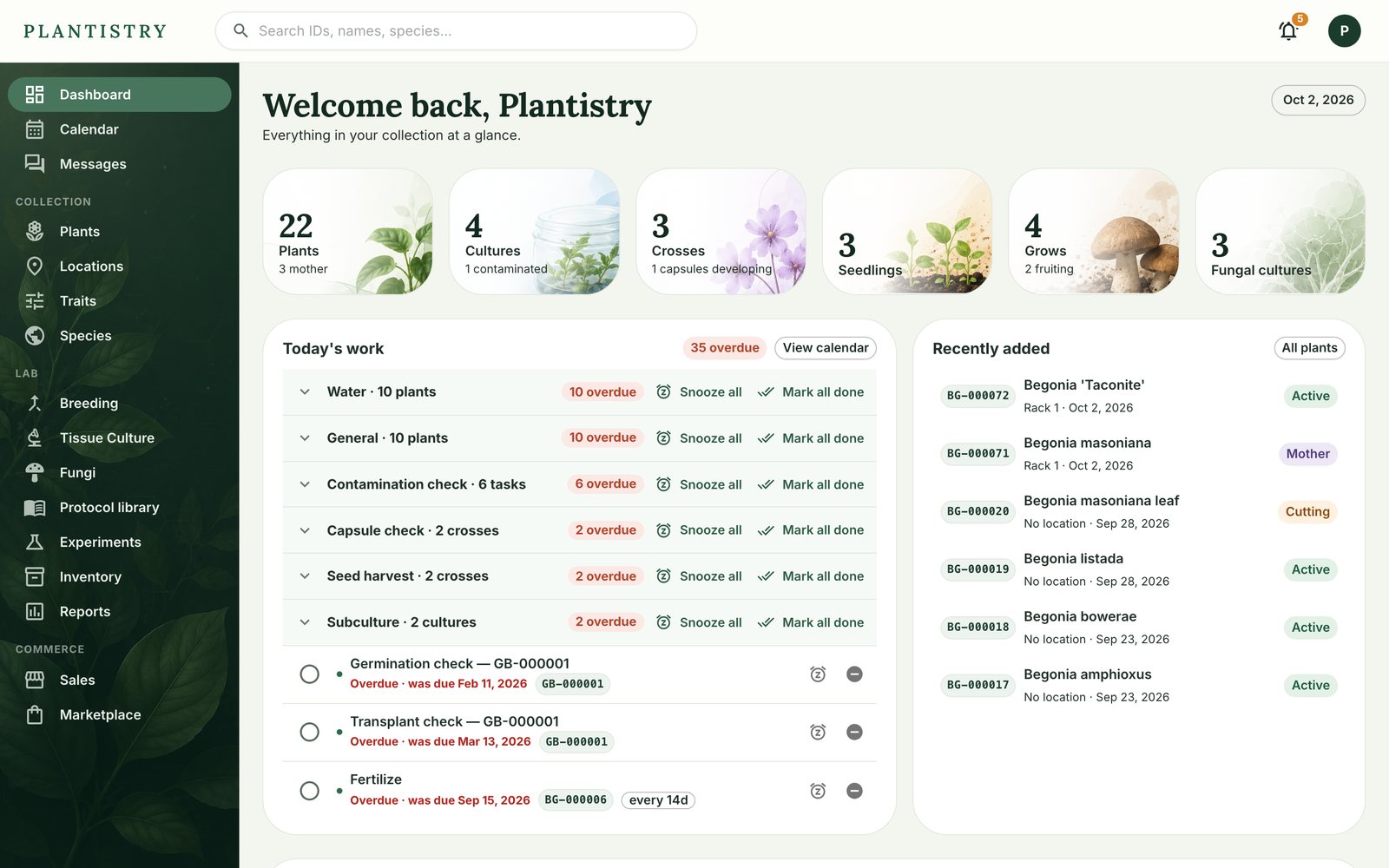
The Plantistry dashboard: the collection's counts, today's work and what was added lately.
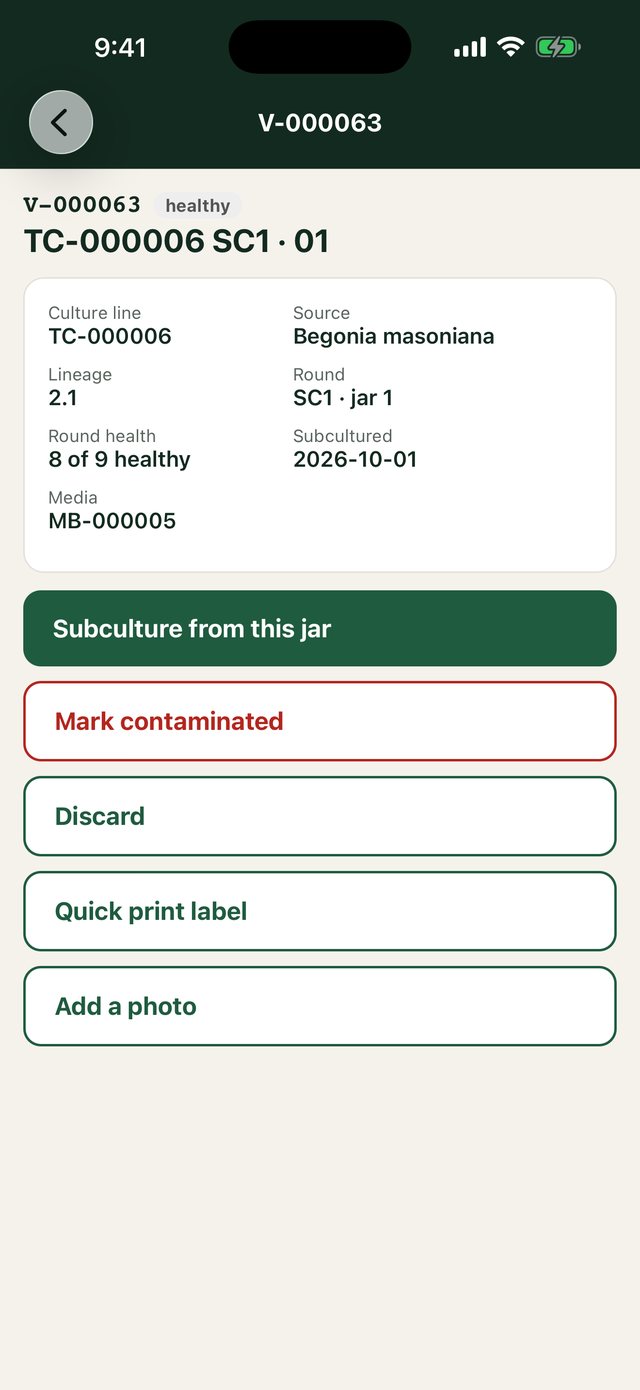
One jar on the phone, with Subculture from this jar, Mark contaminated and Quick print label.
Breed, culture, grow, sell Modules

One app for the whole grow.

Every module writes to the same records, so a jar knows its mother plant and a seedling knows its cross. Pick one.

Every plant, with an ID, a label and its history.

Add a plant by photographing it and Plantistry suggests the species. Photos are dated when they were taken, cuttings and divisions keep their parent, and the chores land on a calendar you tick off by scanning.

  • Photo walk: add a room of plants one photo at a time.
  • Cuttings with a rooting check booked on your calendar.
  • Calendar for watering, feeding, repotting and checks, added to as many plants as you like at once.
Collectors & breeders tour →
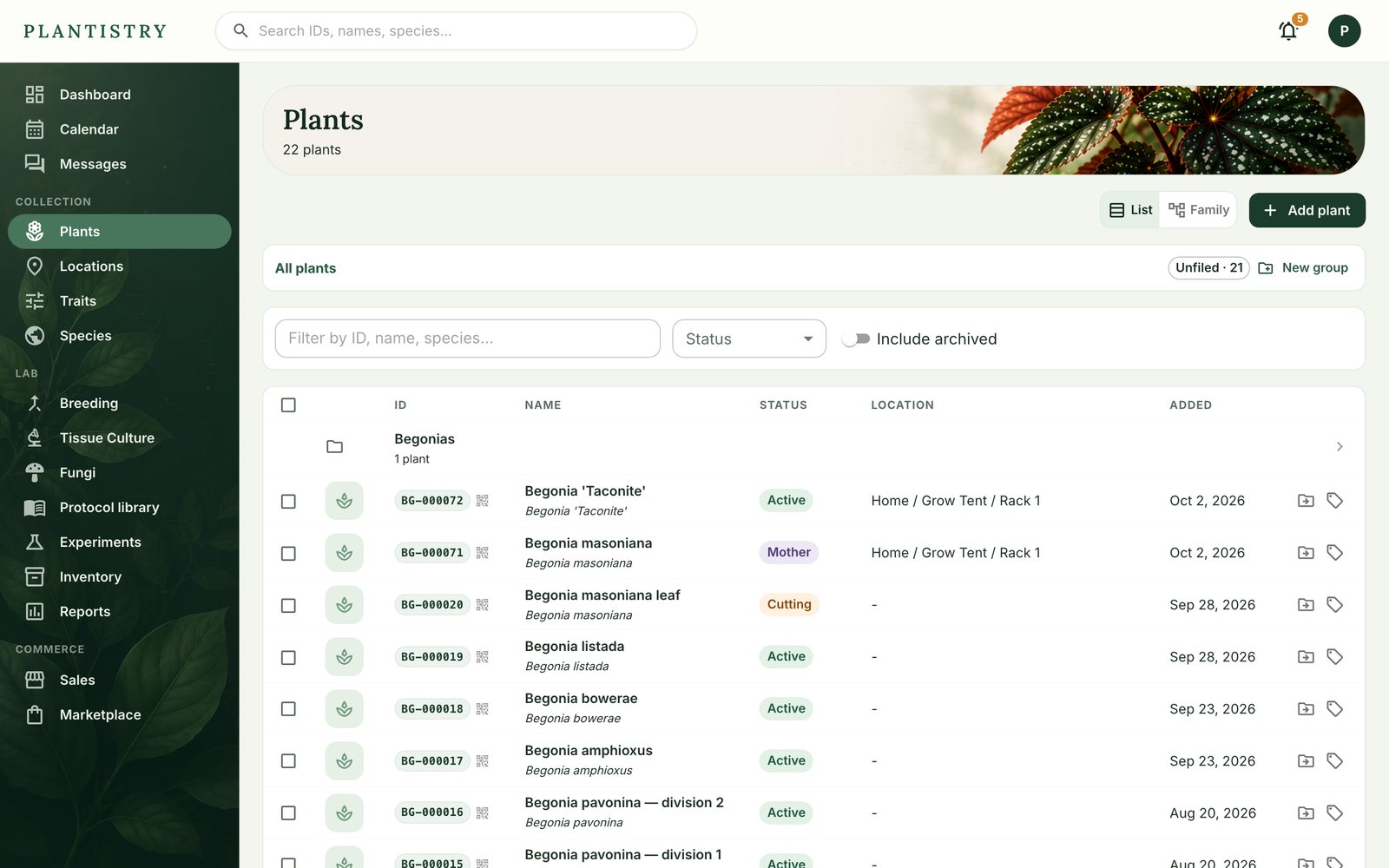
The plant list: every plant with its ID, species, status, location and the day it was added.
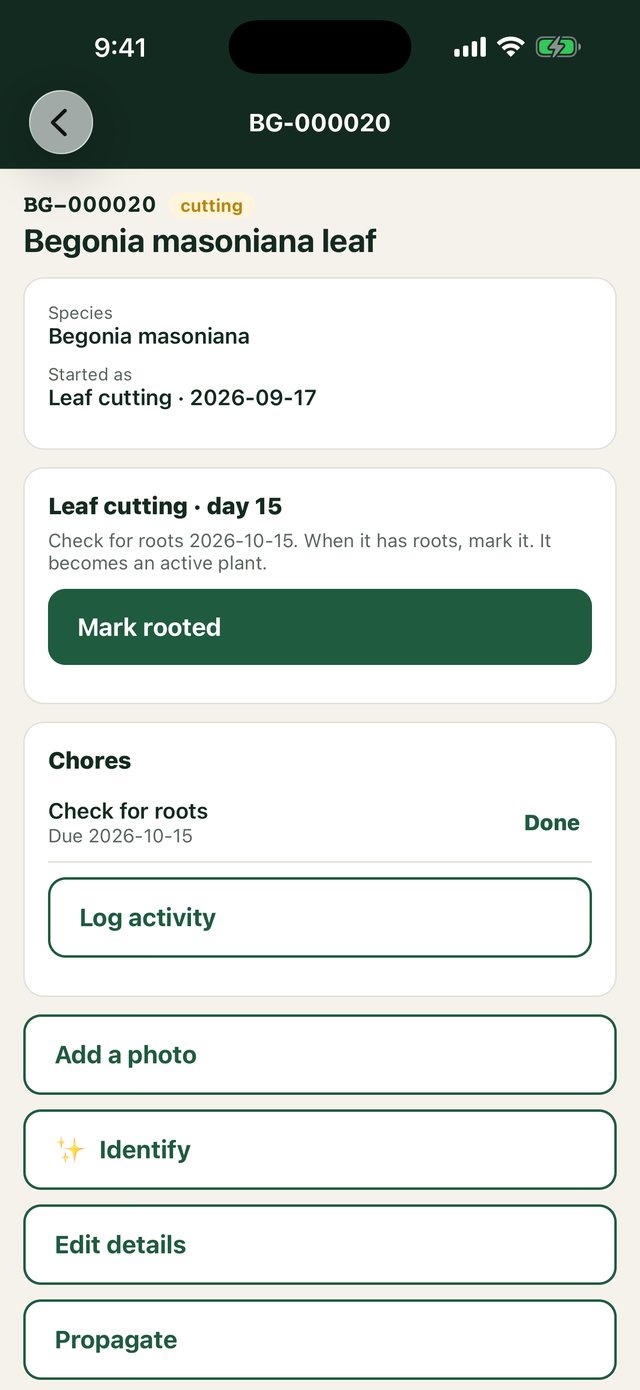
A leaf cutting on the phone, day 15, with Mark rooted.

How it grows in the wild, turned into targets for your shelf.

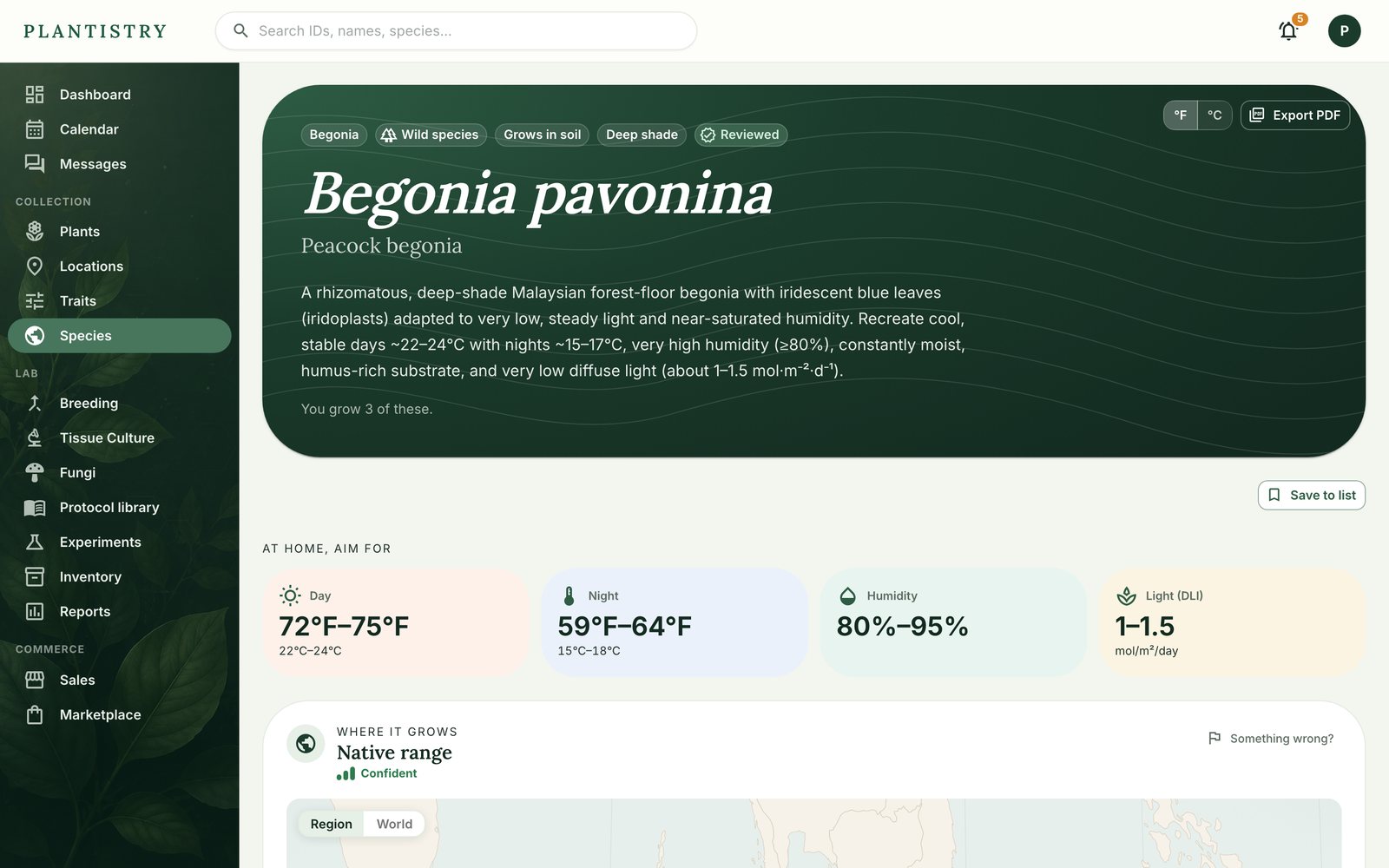
Every plant links to its species. The profile shows where it's recorded in the wild and the conditions there: day and night temperature, humidity, light and seasons, as numbers you can set in a tent or a greenhouse.

  • 50,000+ species; 26,000+ plants and 3,700+ fungi with native-conditions profiles.
  • 6,700+ cultivars and hybrids, 3,900+ traced to their parents.
  • Free accounts get the full profile for every plant they grow.
Browse the public library →
A species page: Begonia pavonina, the conditions to aim for at home and its native range.

Crosses with full family trees.

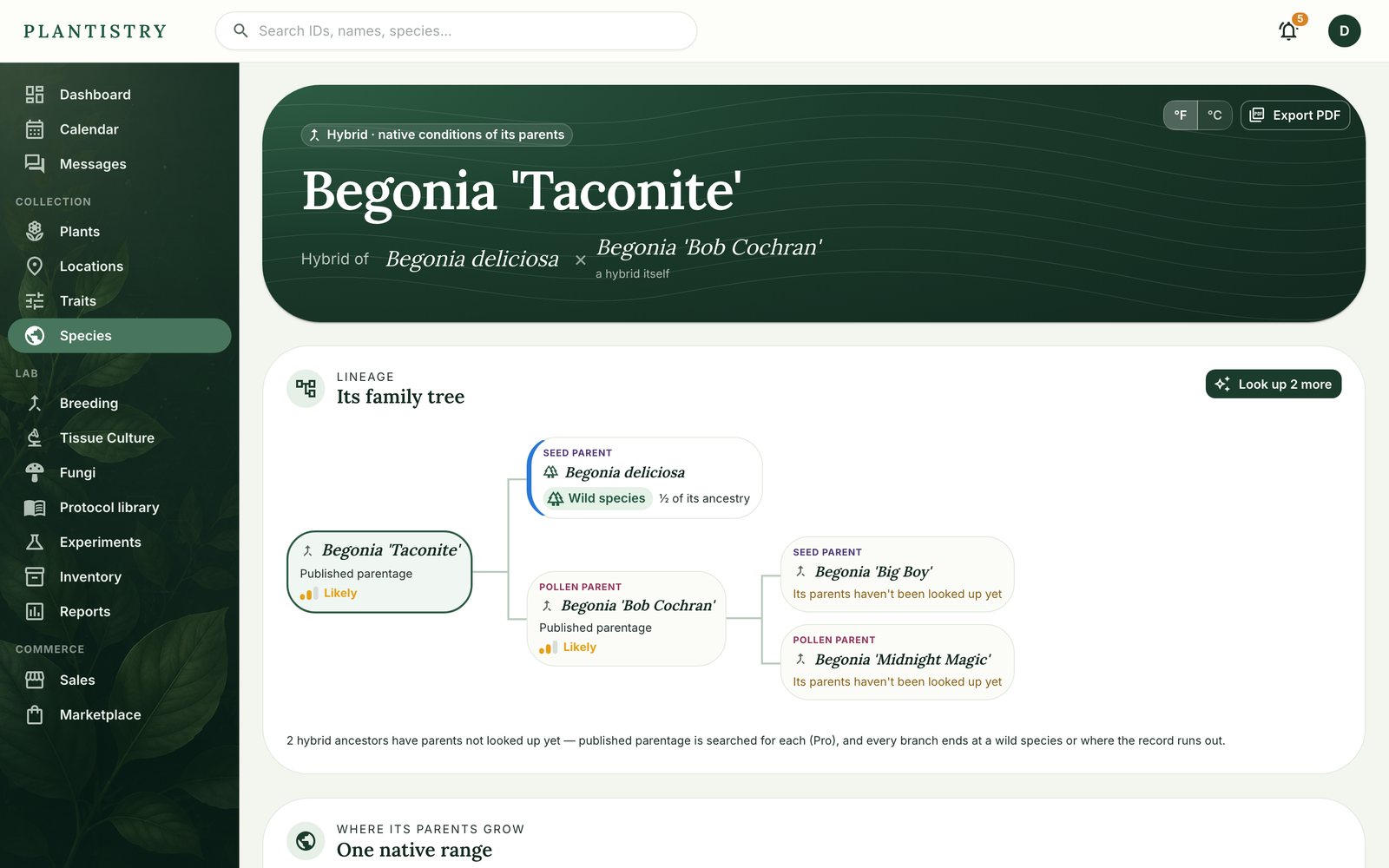
Record the pollination, the capsule, the seed lot and the germination, and every seedling knows its parents. Hybrids and cultivars trace back through their parents to the wild species they came from.

  • Pollen and seed lots with counts and dates.
  • Family trees for your crosses and for registered cultivars.
  • Divisions and clones keep their lineage too.
Collectors & breeders tour →
A cultivar's family tree: both parents and, through them, the wild species it descends from.

Every jar labelled, every round traced.

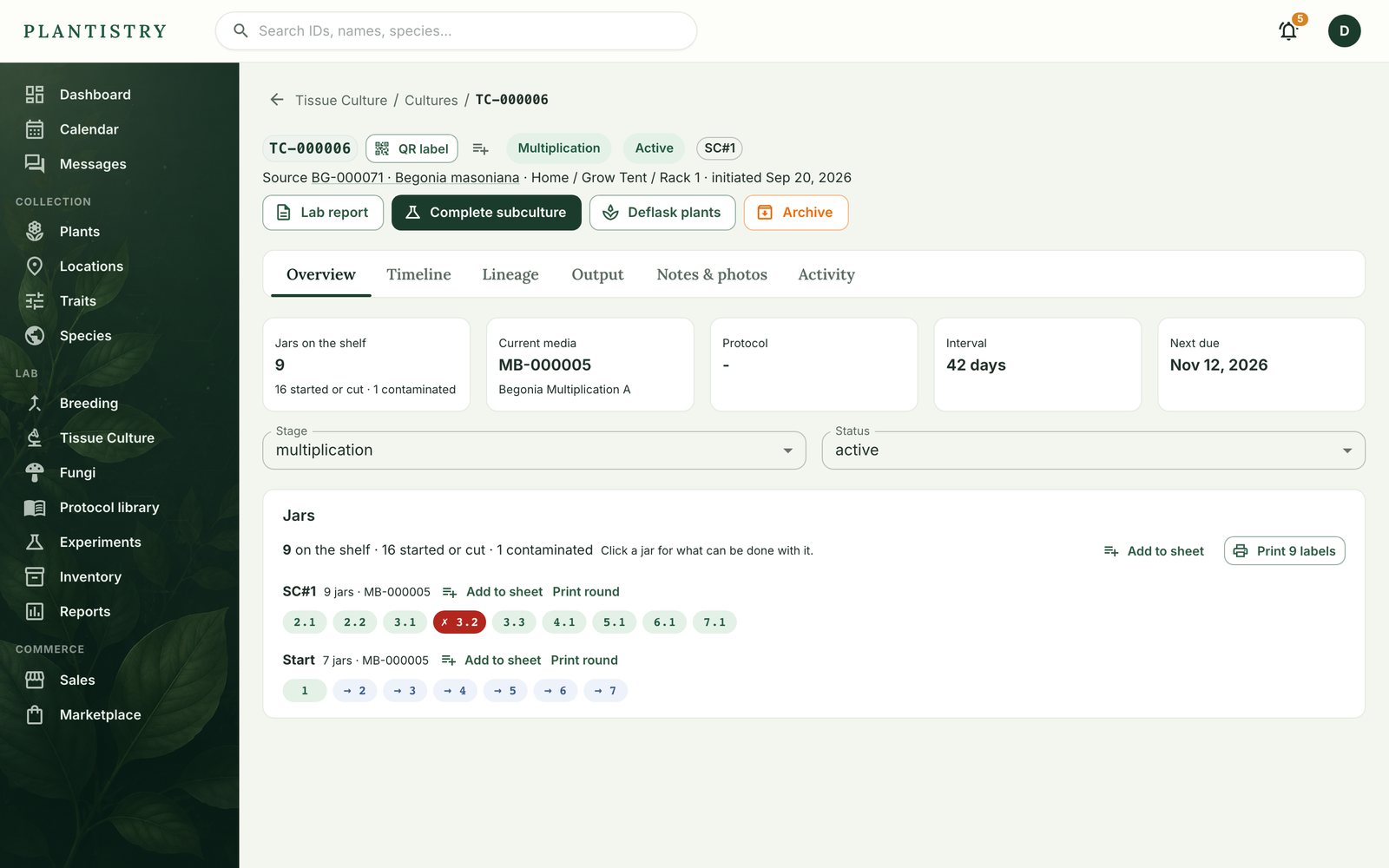
Start a culture with as many cups as you poured and label each one. Subculture jar by jar, so every jar knows the jar it came from, and mark contamination on the jar where it happened. Media is worked out at the bench by a batch calculator.

  • Jars numbered by lineage: 3 becomes 3.1, 3.2, 3.3.
  • Contamination per jar, with a slip undone in a tap.
  • Recipes, batches and a calculator for any volume or number of containers.
  • Protocols you can search, buy and sell: versioned, with the experiment behind them, in the protocol library.
Tissue culture tour →
A culture line: its jars round by round, one marked contaminated, with Print labels.
One jar on the phone, with Subculture from this jar, Mark contaminated and Quick print label.

Culture to flush, with every generation kept.

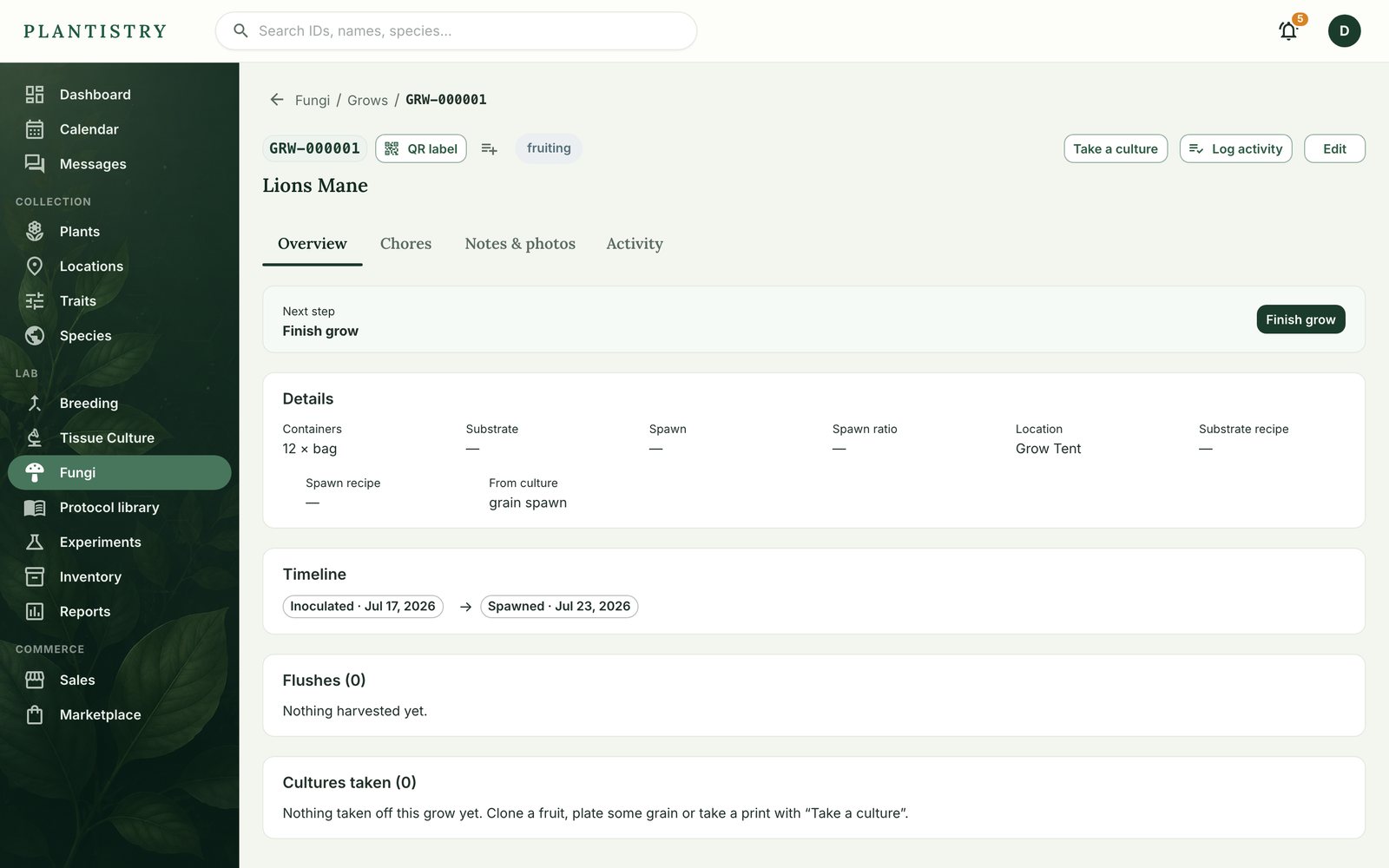
Agar, liquid culture and grain, each a record with its generation and the culture it came from. Grows run from spawn to harvest, and every flush is weighed into the biological efficiency of the batch.

  • Lineage and generation on every culture.
  • Biological efficiency worked out from the flushes.
  • Trials to compare substrates, strains and spawn rates.
Mushroom growers tour →
A grow: substrate, spawn, its timeline from inoculation to fruiting, flushes and cultures taken.
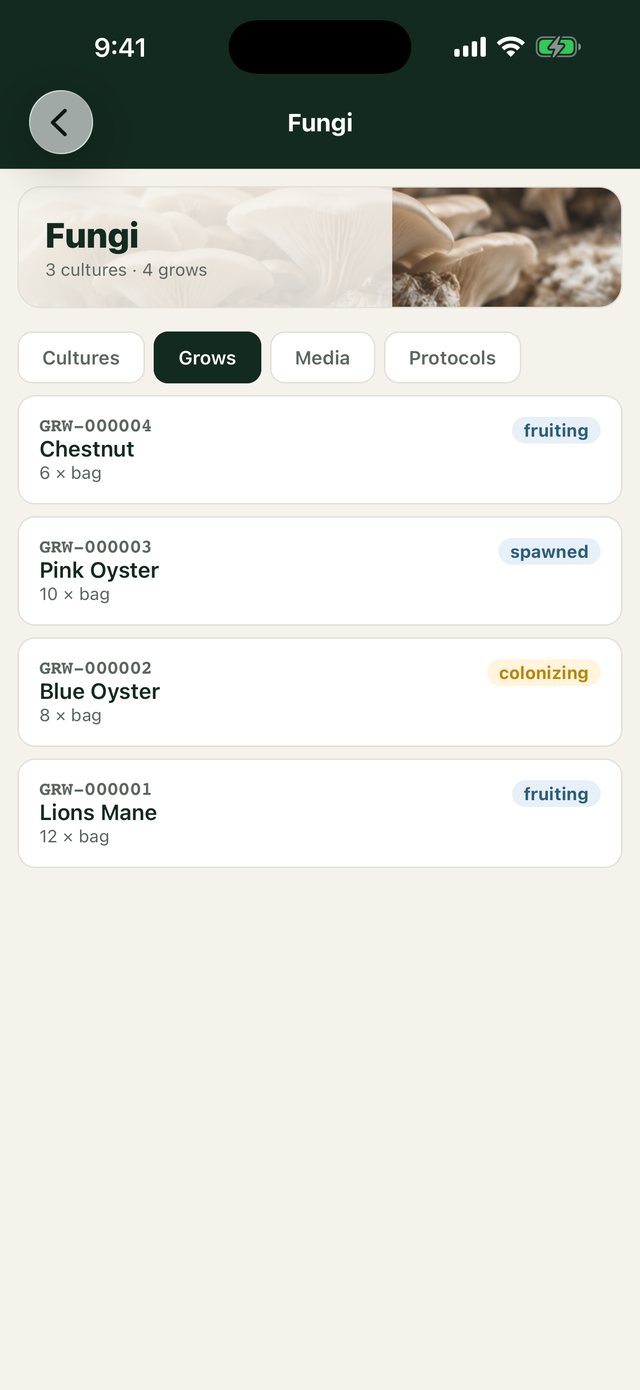
Fungi grows on the phone.

Find out what works, with the results computed.

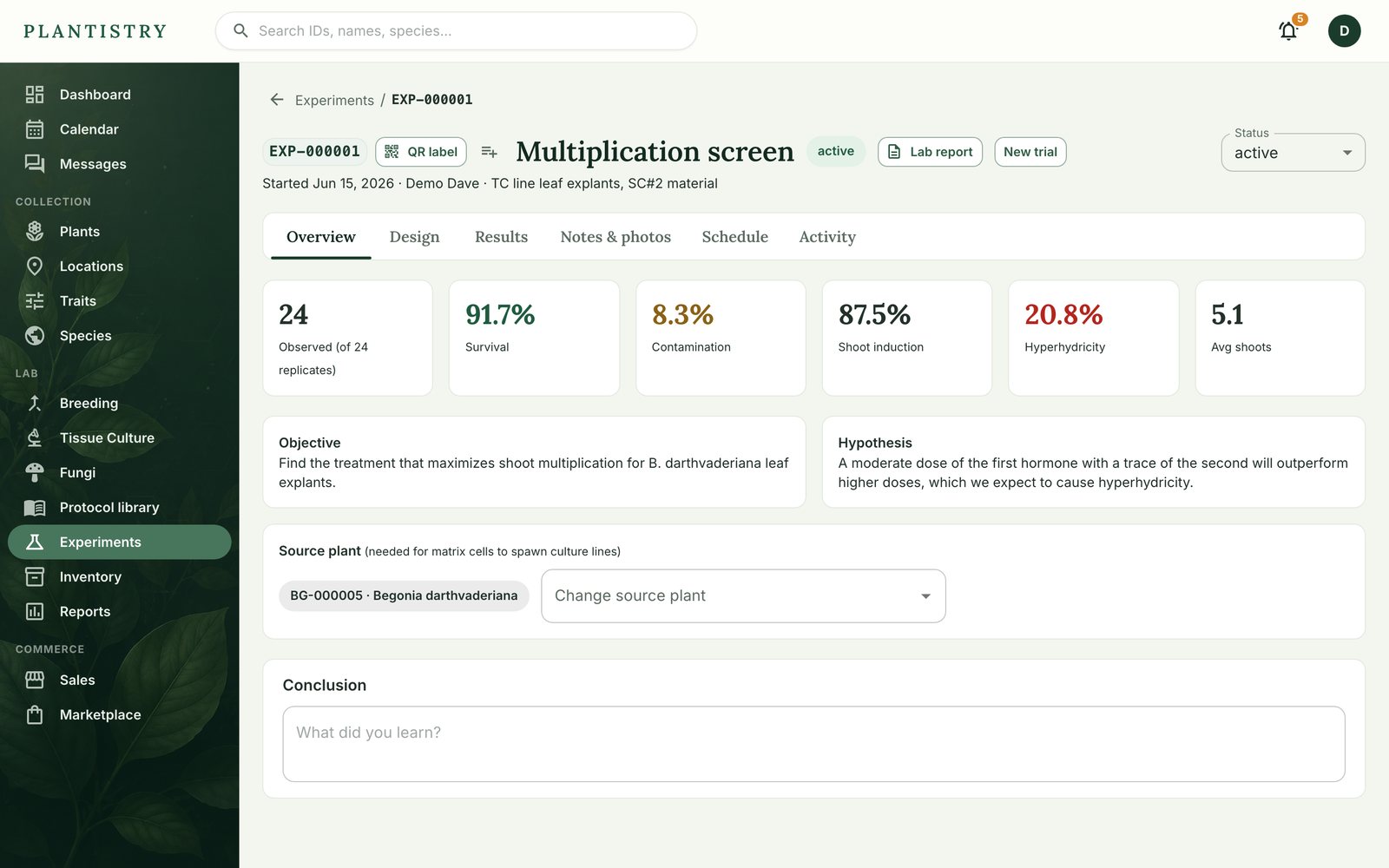
Set up treatments and replicates, observe them from the bench or an iPad, and Plantistry works out survival, contamination and response per treatment, with the best one starred. Make the winner your protocol.

  • Treatment matrices with replicates labelled like any jar.
  • Observations from the phone, by scanning the replicate.
  • Protocols versioned, with the experiment they came from.
Tissue culture tour →
An experiment: survival, contamination and shoot induction across its replicates.

Labels printed in the lab, from your phone.

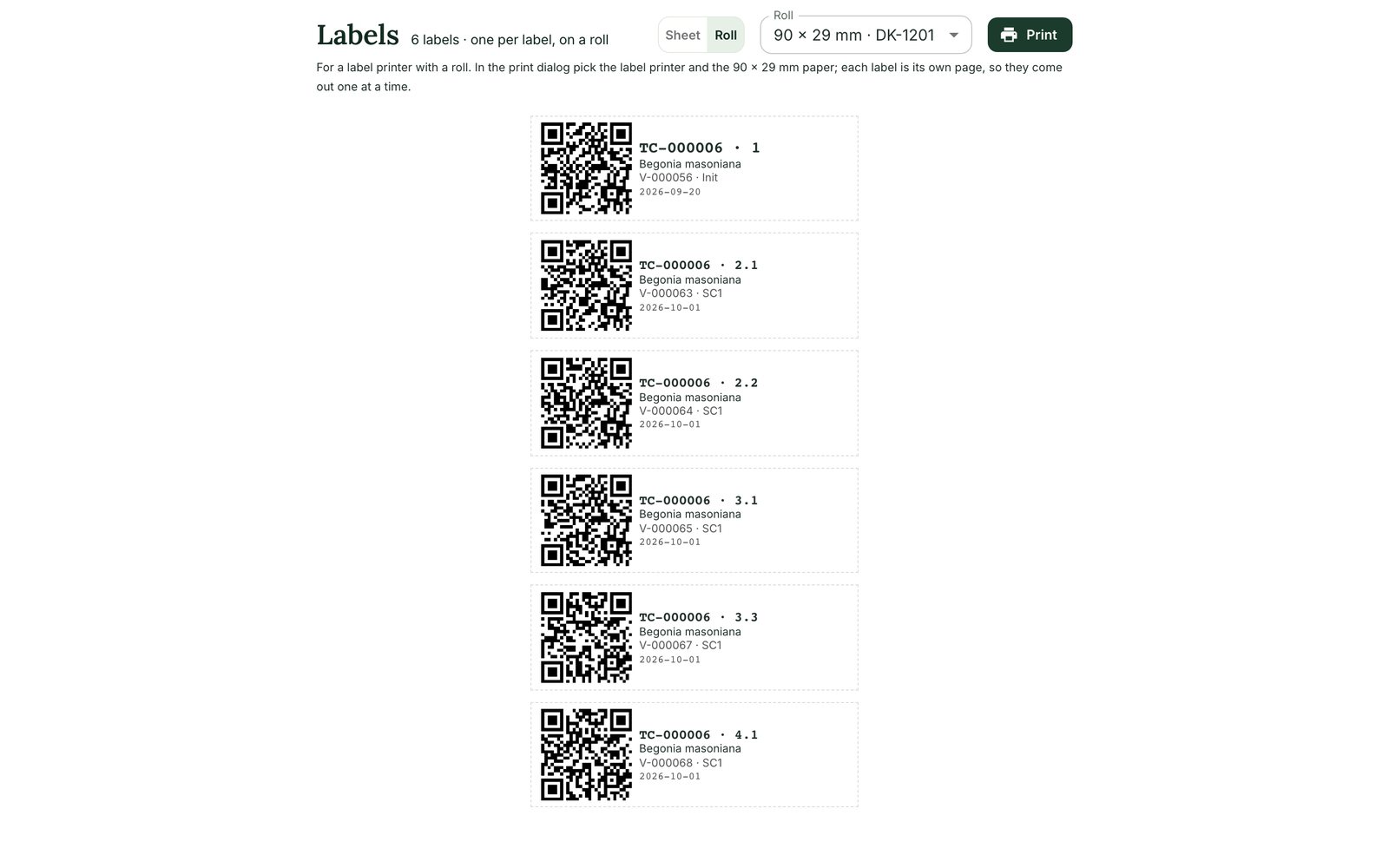
Every plant, jar, bag and culture gets a QR label. Print a sheet from any printer, or one label at a time from a label printer on the lab Wi-Fi, straight from the phone at the bench. Scan a label and the record opens with its next actions ready.

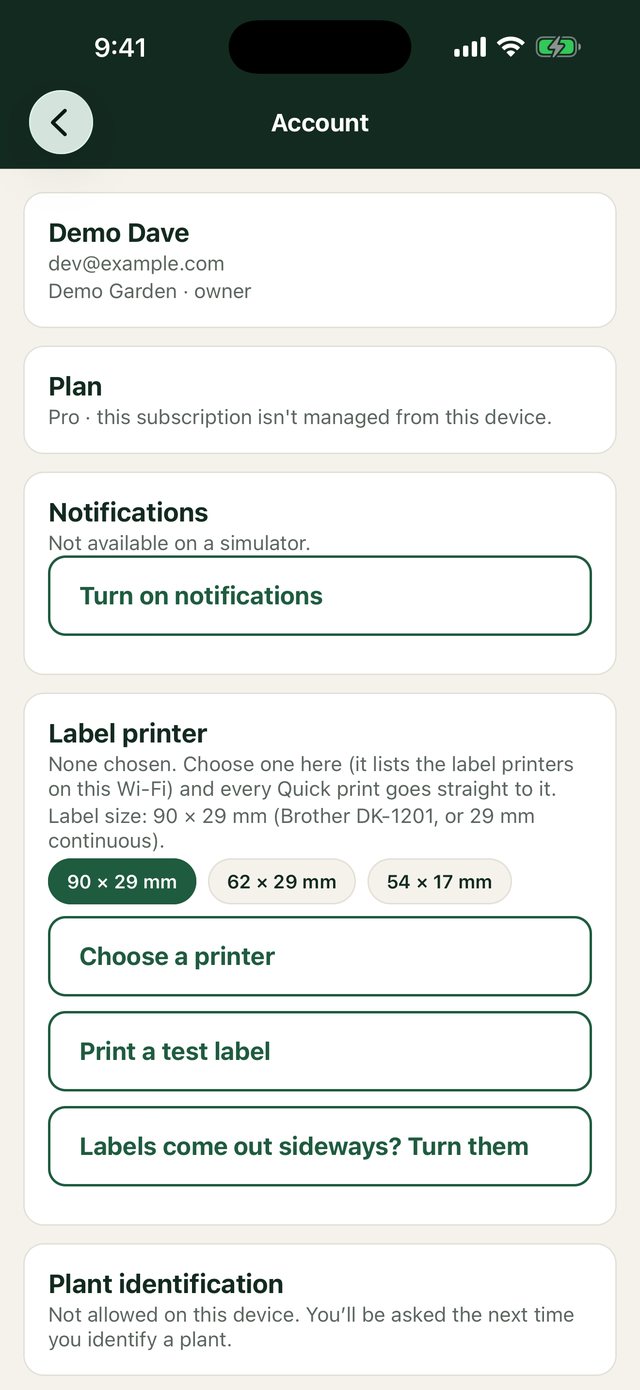
  • Quick print to a Brother QL label printer, set up once in the app.
  • Three roll sizes and Avery sheets; collect a sheet across cultures and print it once.
  • Every label says what's inside: the ID, the plant, the jar's path and the date.
See it in the tissue culture tour →
Jar labels laid out for a label printer roll, each with its QR code, line, jar, plant and date.
The label printer set up on the phone: roll size, choose a printer, print a test label.

Plants, protocols and lab equipment, bought and sold between growers.

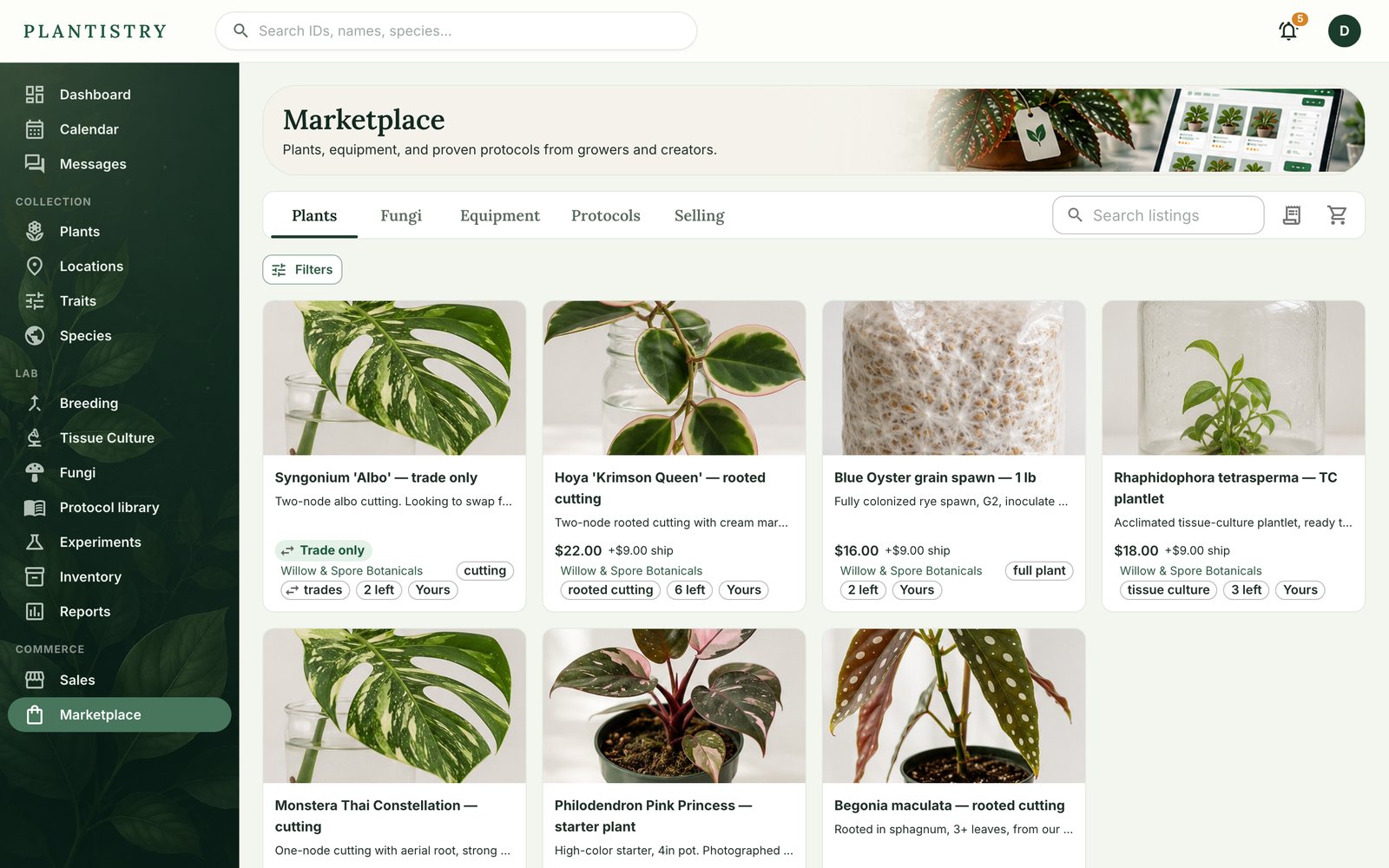
List plants, cultures and cuttings with their lineage and photos, or trade plant for plant. Build a lab on a budget from gear other growers have outgrown, a flow hood, a pressure cooker, a label printer, lights and shelving, and sell your own when you upgrade. Protocols sell too.

  • Provenance on every plant listing, straight from the record.
  • Equipment, used and new: the lab you need at the price you can start at.
  • Protocols for sale, versioned, with the experiment behind them.
  • Tracked shipping, reviews and disputes built in.
Open the marketplace →
The marketplace: plants, cultures and cuttings listed with their provenance.
Tours

Pick your corner of the grow.

Species library

How every plant grows in the wild.

Over 50,000 species by name, and for more than 30,000 of them, plants and fungi, a profile of where they grow wild and the conditions there, turned into targets you can set on a shelf, in a tent or in a greenhouse. Hybrids are worked out from their wild parents.

50,000+species
26,000+plant profiles
3,700+fungi profiles
6,700+cultivars and hybrids
3,900+traced back to their parents
iPhone, iPad & Android

Works where the plants are.

Scan a label and the right record opens. Mark a jar contaminated, print the next round's labels, tick off a watering round, add a plant by photographing it. Pull up a protocol and its recipe at the bench, or record a full experiment on an iPad, without carrying a laptop into the grow room.

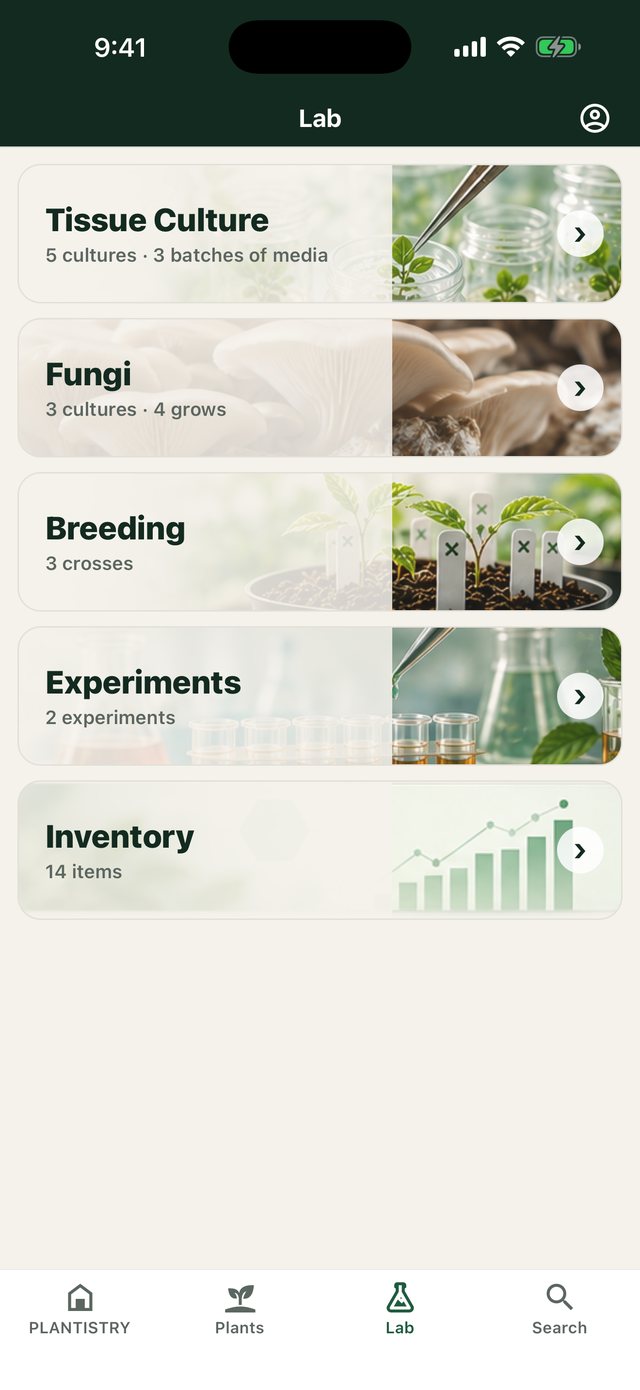
The Lab tab on iPhone: tissue culture, fungi, breeding, experiments and inventory.
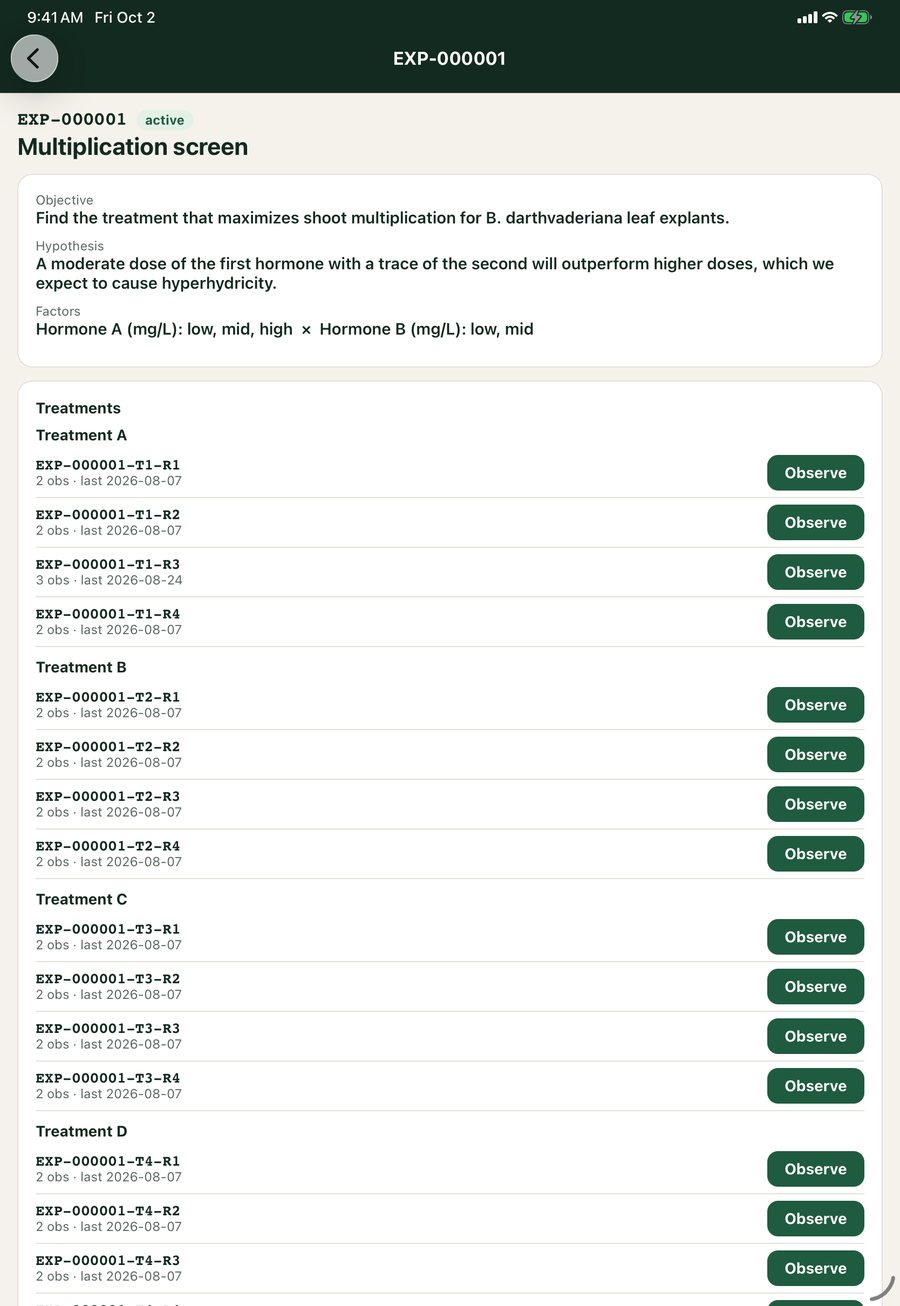
An experiment on iPad: its objective, factors and every treatment's replicates, each with an Observe button.
One jar on iPhone, with Subculture from this jar, Mark contaminated and Quick print label.
Quick print from the phone
to a label printer on the lab Wi-Fi

Both apps are free with any Plantistry account.

Pricing

Start free. Upgrade when you breed. Add your team when you grow.

Free

$0
forever
  • Up to 10 plants
  • Photos with date stamps
  • Trait catalog & observations
  • Locations & hierarchy
  • Tasks & calendar
  • Global search
  • Full species profiles for the plants you grow
Create account
Full toolkit

Pro

$12.99 $10.75/month
14 days free, then $129/year · cancel anytime14 days free, then monthly · cancel anytime
  • Unlimited plants
  • Breeding: crosses, pollen, seed lots, germination
  • Genealogy & family tree
  • Tissue-culture lab
  • Mushroom cultivation: cultures, grows & BE%
  • Experiments with computed results
  • Sales & breed-stock tracking
  • Inventory with lot traceability
  • Reports, analytics & QR labels
  • The whole species library: 30,000+ profiles, plants and fungi
  • Plant identification from a photo
Try Pro free for 14 days
For teams

Lab

$39 $32.50/month
14 days free, then $390/year · for teams14 days free, then monthly · for teams
  • Everything in Pro
  • Up to 5 people in one garden
  • Invite staff or collaborators by email
  • Per-person access to each module
  • Shared records, individual attribution
  • Hand over ownership when people move on
Try Lab free for 14 days

Need commercial capacity or a self-hosted solution? Contact sales

Your data is yours: export everything as CSV or PDF.  ·  Stop paying and your records stay.  ·  Private by default; only the people you invite.

Questions

Before you start.

Is it really free?

Yes, for up to 10 plants, with photos, tasks, locations and full species profiles for the plants you grow. No card needed. Pro adds unlimited plants, breeding, tissue culture, fungi, experiments and the whole species library.

Can I get my data out?

Any time. Every record exports as CSV, and reports export as PDF.

What happens if I stop paying?

Your records stay. A garden that lapses can still open everything it recorded; it just can't add to the Pro sections until it renews.

Does it work on my phone?

Yes. The iPhone and iPad app is on the App Store and the Android app is on Google Play, both free with any account, and built for the bench: scan a label, record what happened, take a photo, print a label. Everything also works in a phone's browser today.

Which label printer do I need?

None to start: labels print on Avery 30-up sheets from any printer. For one label at a time at the bench, a Brother QL label printer with Wi-Fi (QL-810W or QL-820NWB) prints straight from the phone.

Can my team use it?

The Lab plan adds up to five people to one garden, with access set per person and every record signed by who did it.

Who can see my plants?

Only you and the people you invite. Nothing is public unless you list it on the marketplace.
Your plants deserve better records.

Set up your collection in minutes. The first ten plants are on us.