Ganoderma lucidum
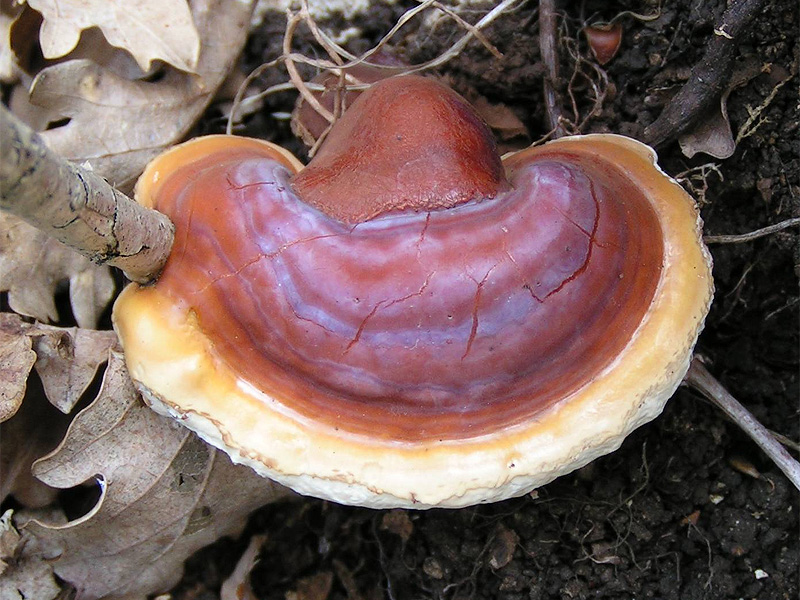
A shiny, lacquered bracket fungus that causes white rot and fruits from the base of dying and dead hardwoods, especially oak. True G. lucidum is a European species. Much of what is sold and grown as reishi or G. lucidum is actually the Asian lingzhi, G. sichuanense (G. lingzhi). The two grow the same way: colonise hardwood sawdust or logs warm, then fruit warm and humid, with enough fresh air and light to form proper caps instead of antlers.
Where it grows wild
A wood-decay fungus that is parasitic to saprotrophic. It fruits at the base of living but weakened trees, on stumps and on buried roots of broadleaved trees, especially oak, and also on other hardwoods. It causes a white rot. The fruit bodies are annual, kidney- to fan-shaped with a glossy red-brown crust, and form in summer and autumn.
Mainly lowland. The nine records with an elevation span 40–1173 m, median 200 m.
🔒 Growing it like that
The wild conditions above, turned into targets for a shelf, a tent or a greenhouse. The full profile has:
Grow Ganoderma lucidum? Add it to a free garden and its full profile opens. Pro opens all 38,374 profiles in the library, plants and fungi.
More Ganoderma
Profiles are drafts built from measured range and climate and from published sources; each section carries its own confidence in the app. Photo from Wikimedia Commons, used under its CC BY-SA 3.0 licence, unmodified.