Utricularia rostrata
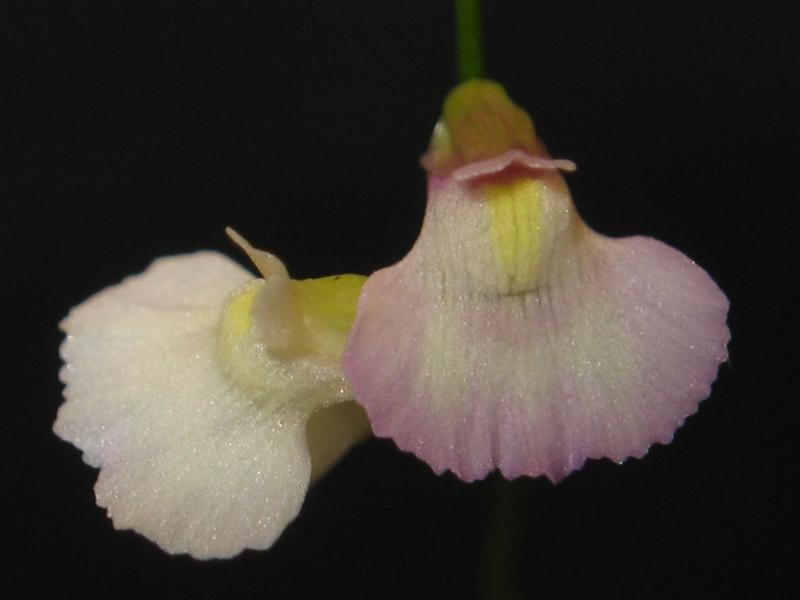
A small terrestrial bladderwort endemic to the Chapada Diamantina highlands of Bahia, Brazil, where it grows in wet sand and rock fissures by streams and waterfalls in the campo rupestre. It is usually annual, producing white to violet flowers with a yellow patch and a distinctive beaked upper calyx lobe. Grow it hot and bright in constantly wet sandy peat, and keep it going from seed.
Where it grows wild
A terrestrial herb of damp sandy soils near streams and waterfalls, and of wet rock fissures and seasonally wet stream beds in the rocky grasslands (campos rupestres) of the Chapada Diamantina. Wikipedia describes semi-shaded sites, while herbarium labels call it sun-loving and sand-dwelling.
Wikipedia gives 550–1,570 m; GBIF records span 258–1,750 m with a median of 935 m.
🔒 Growing it like that
The wild conditions above, turned into targets for a shelf, a tent or a greenhouse. The full profile has:
Grow Utricularia rostrata? Add it to a free garden and its full profile opens. Pro opens all 38,374 profiles in the library, plants and fungi.
More Utricularia
Profiles are drafts built from measured range and climate and from published sources; each section carries its own confidence in the app. Photo from Wikimedia Commons, used under its Public domain licence, unmodified.