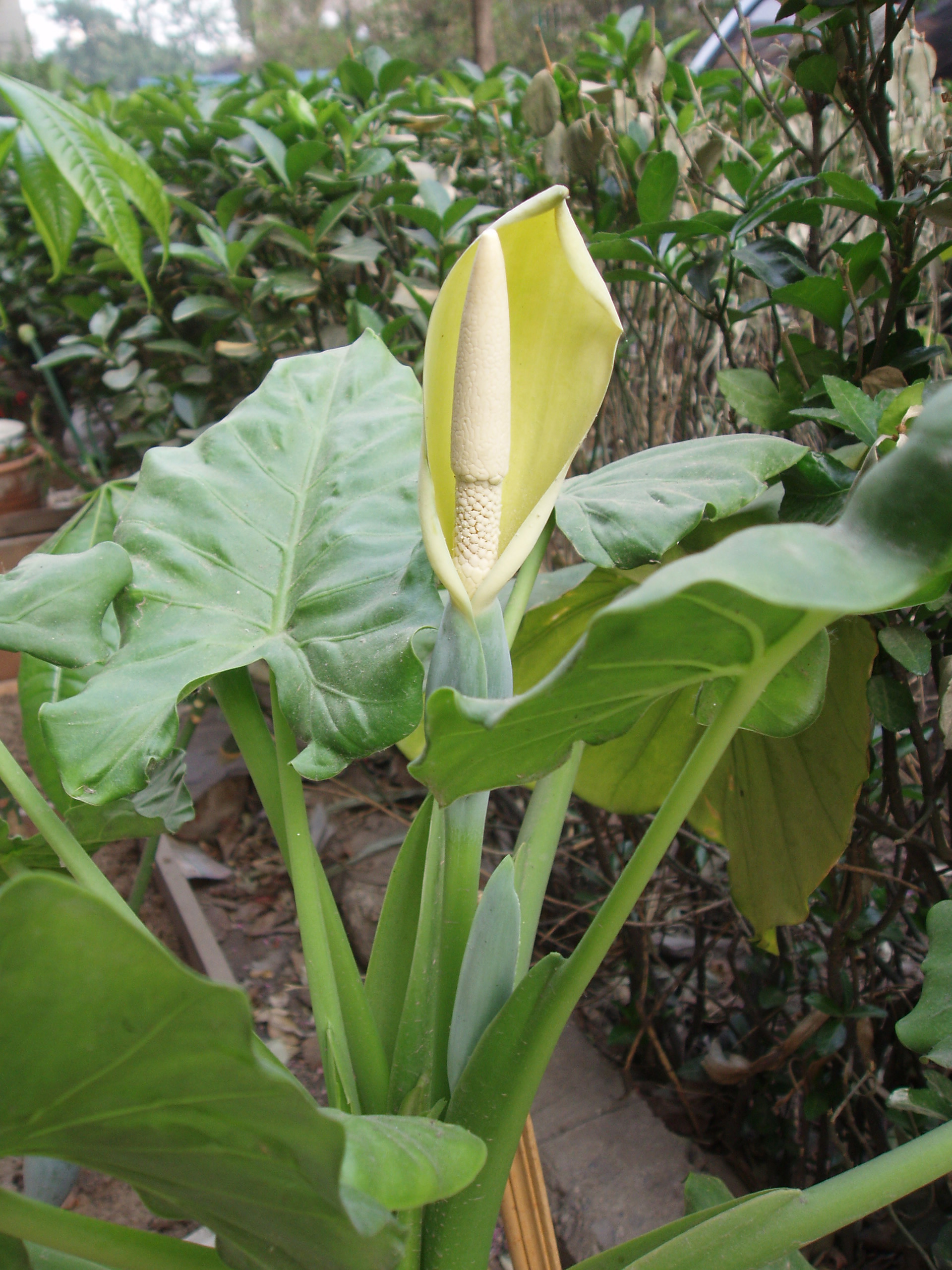
Alocasia macrorrhizos
A huge, thick-stemmed Alocasia and an ancient starch and fodder crop, probably domesticated in the Philippines and carried across Malesia and the Pacific. Its truly wild range is unclear: across its range it is mostly found around villages, ditches, riverbanks, forest edges and disturbed damp ground. It is a hot, wet lowland plant that takes far more light than the forest-floor alocasias, from part shade to full sun.
Where it grows wild
Terrestrial, in damp, fertile, disturbed lowland sites such as river banks, ditches, forest margins and gaps, secondary growth, roadsides and village clearings. It is associated with people across most of its range, and its natural habitat is uncertain.
It is essentially lowland, from sea level to about 500 m as a naturally occurring plant, with cultivated plants to about 1000 m or more. The measured records span 2–635 m with a median of 125 m. Philippine records reach 1829 m, but these are crops.
🔒 Growing it like that
The wild conditions above, turned into targets for a shelf, a tent or a greenhouse. The full profile has:
Grow Alocasia macrorrhizos? Add it to a free garden and its full profile opens. Pro opens all 38,374 profiles in the library, plants and fungi.
More Alocasia
Profiles are drafts built from measured range and climate and from published sources; each section carries its own confidence in the app. Photo from Wikimedia Commons, used under its CC BY-SA 3.0 licence, unmodified.